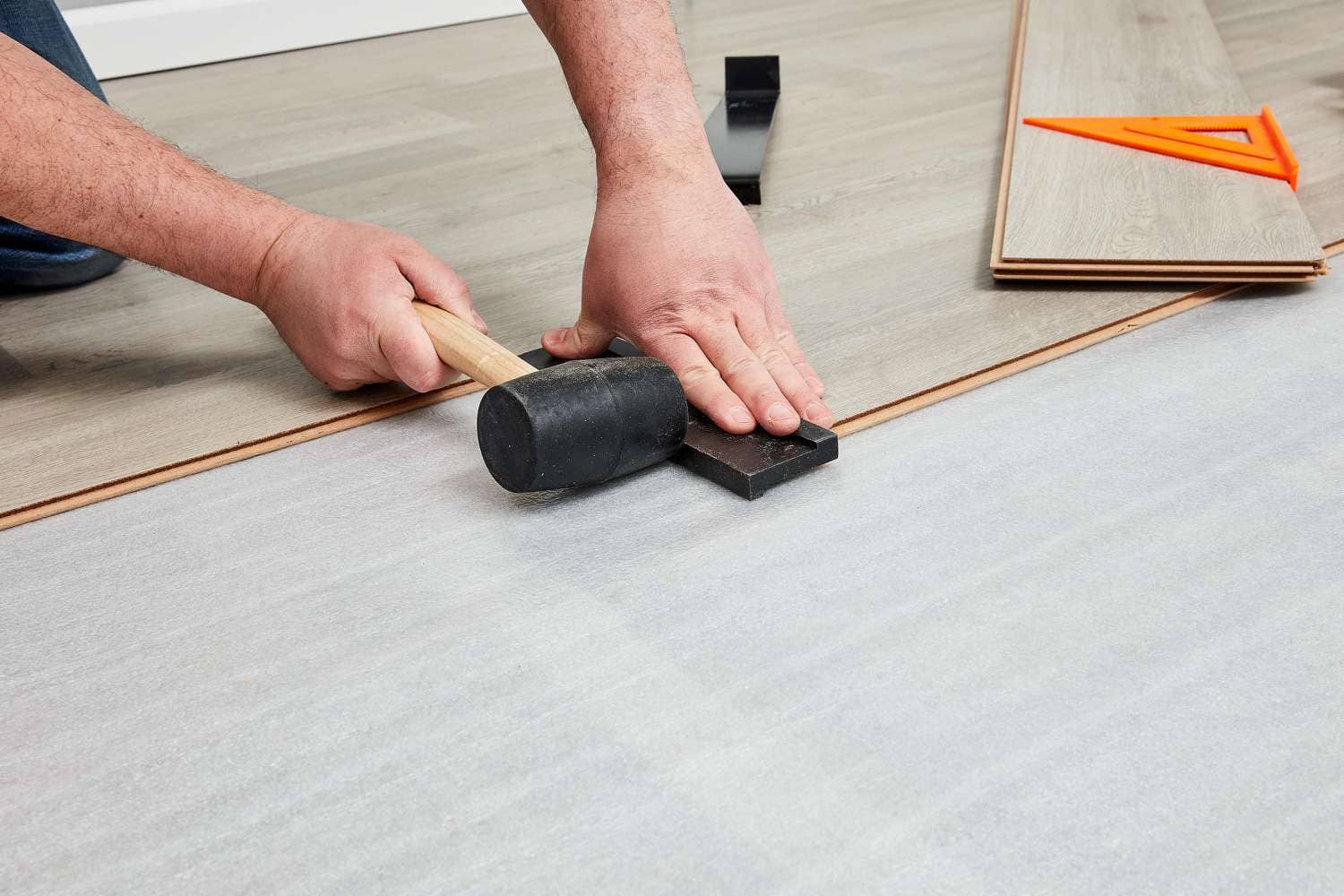
If you live in a Vancouver condo, the words "acoustic underlayment" and "IIC rating" will come up in every flooring conversation you have with your strata council. If you live in a single-family Vancouver home with concrete basement, "vapour barrier underlayment" matters just as much. Underlayment is the layer between your subfloor and your finished floor — and getting it right is the difference between a quiet, long-lasting installation and a strata violation letter or a moisture failure.
This guide covers everything Vancouver homeowners and condo owners should know about flooring underlayment in 2026, with a particular focus on the IIC / STC ratings most strata buildings in Vancouver require.
What is flooring underlayment?
Underlayment is the thin layer (typically 2–6mm) installed between your subfloor (concrete, plywood) and your finished flooring (hardwood, LVP, laminate, tile, carpet). It does three jobs:
- Sound dampening — reduces impact noise (footsteps, dropped objects) transmitted to the unit or floor below
- Moisture protection — blocks moisture vapour from concrete subfloors reaching the wood finished flooring above
- Subfloor smoothing — fills minor imperfections in the subfloor so the finished floor sits flat
Vancouver condos and strata: why IIC ratings matter
Almost every Vancouver strata building has flooring rules in its bylaws. The most common requirement is a minimum IIC (Impact Insulation Class) rating for any new hard-surface flooring (hardwood, engineered, LVP, laminate, tile).
What is IIC?
IIC measures how much impact noise — footsteps, dropped pots, dragged chairs — transmits through your floor assembly to the unit BELOW yours. Higher IIC = quieter for your neighbour.
- IIC 50: minimum for any hard-surface install. Rare in Vancouver strata buildings (most require more).
- IIC 55–60: acceptable in some older Vancouver buildings.
- IIC 65: the most common Vancouver strata requirement. Bylaws in Yaletown, Coal Harbour, downtown, False Creek, Olympic Village, and most newer buildings specify IIC 65+.
- IIC 70+: premium luxury buildings, some newer construction.
What is STC?
STC (Sound Transmission Class) measures airborne sound (voices, TV) transmission. STC is less commonly specified in Vancouver strata bylaws than IIC, but some buildings require both.
Where do these ratings come from?
IIC and STC are floor assembly ratings — they depend on the underlayment AND the finished flooring AND the subfloor. A product sold as "IIC 70 underlayment" means it achieves IIC 70 in a specific tested assembly (usually 6-inch concrete slab + the product + 12mm laminate). On a different assembly, the actual rating may differ.
When choosing underlayment for your Vancouver condo, look at the manufacturer's tested assemblies and match one to your situation. If your strata is strict, get the specific product's IIC/STC test report.
Underlayment types we install in Vancouver
1. Foam underlayment (1–3mm EVA / EPE)
Thin, inexpensive, basic moisture barrier. Suitable for laminate over plywood subfloor in single-family homes. Usually NOT IIC-rated high enough for Vancouver condos. Cost: $0.30–$0.80/sqft.
2. Cork underlayment (3–6mm)
Natural cork has excellent sound absorption. Premium choice for hardwood and engineered hardwood. Achieves IIC 50–60 in typical assemblies. Cost: $1.50–$3/sqft.
3. Rubber underlayment (3–8mm)
The gold standard for Vancouver condo IIC requirements. Synthetic rubber (or recycled rubber) achieves IIC 65–72 in typical assemblies. Used under hardwood, LVP, laminate. Cost: $2–$5/sqft. Brands: TruSilient, Pliteq Genie, ProFlex.
4. Felt underlayment (3–5mm)
Old-school choice for hardwood, still used in some installations. Decent moisture protection, moderate sound dampening. Cost: $1–$2/sqft.
5. Integrated underlayment (pre-attached)
Many modern LVP/SPC and laminate products come with underlayment pre-attached to the back. Convenient and faster install, but typically thinner and lower IIC than a separate premium underlayment. Check the IIC rating before relying on integrated for a strata condo.
6. Cement board / tile backer
For tile installations, cement board (1/4"–1/2") on plywood subfloor, OR Schluter DITRA decoupling membrane. Schluter DITRA-HEAT additionally adds electric heating. Cost: $1.50–$4/sqft.
Moisture barriers for concrete subfloors
Vancouver high-rise condos, basement suites, and many newer townhouses have concrete subfloors. Concrete is porous and passes moisture vapour even when it looks dry. For hardwood, engineered, laminate, or click-lock LVP over concrete, a 6-mil polyethylene vapour barrier is essential under the underlayment.
Some premium underlayments come with a vapour barrier built into the underside. Verify before purchase. Skipping this layer is the most common cause of hardwood failure in Vancouver basement installations.
Underlayment by finished flooring type
| Flooring | Recommended Underlayment | Why |
|---|---|---|
| Engineered hardwood | Cork or rubber (5–6mm) + vapour barrier on concrete | Sound + moisture; IIC 65+ for condos |
| Solid hardwood | Felt or rosin paper (single-family); not condo-suitable | Solid hardwood is rarely used in Vancouver condos |
| LVP / SPC | Rubber (3–5mm) or premium foam with IIC rating | Condo strata requires high IIC; rigid SPC needs less smoothing |
| Laminate | Rubber or quality foam with IIC + vapour barrier on concrete | Laminate is loud without proper underlay |
| Carpet | 8-lb premium carpet pad (or 10-lb for stairs) | Higher density = longer carpet life + better feel |
| Tile | Schluter DITRA decoupling membrane (+ DITRA-HEAT for warmth) | Prevents subfloor cracks transferring to tile |
What can go wrong with the wrong underlayment
- Strata violation letter — using IIC 50 underlay in a building that requires IIC 65 means the strata can require you to tear up your new floor and reinstall.
- Hardwood cupping or buckling — skipping the vapour barrier over concrete causes moisture to wick into the wood.
- Squeaky or hollow-feeling floors — thin or cheap underlay can't compensate for an uneven subfloor.
- Premature wear in laminate joints — improper underlay can cause click-lock joints to separate or lock improperly.
- Tile cracking — without decoupling membrane, normal subfloor expansion/contraction transfers to brittle tile.
Underlayment cost in Vancouver (2026)
- Basic foam underlay: $0.30–$0.80/sqft material
- Cork underlay: $1.50–$3/sqft material
- Rubber underlay (IIC 65+): $2–$5/sqft material
- Premium rubber (IIC 70+): $4–$8/sqft material
- Vapour barrier polyethylene: $0.20–$0.40/sqft material
- Schluter DITRA for tile: $2–$4/sqft material
- Schluter DITRA-HEAT (with heating): $7–$12/sqft material + electrician cost
- Installation labour: typically included in the flooring install ($0.50–$1.50/sqft separately)
How to confirm your Vancouver condo's underlayment requirement
- Ask your strata council for the bylaw — most provide a one-page "flooring specifications" document on request
- Check for IIC and STC minimums in the bylaw
- Get the manufacturer's test report for the underlay you want to use, showing it meets or exceeds the bylaw rating in a similar assembly
- Submit the spec sheet to your strata council with your renovation application
- Keep the documentation in case a future neighbour complains about impact noise
We handle all this paperwork as a routine part of every Vancouver condo flooring project. We carry the most common IIC-rated underlayments in our showroom and have spec sheets ready.
Our Process for Vancouver Condo Flooring
- Free in-home consultation — measurements, building check, underlayment requirements identified
- Strata bylaw verification — we pull the IIC requirement from your strata's documents
- Showroom samples — see underlayment + flooring options together at our West Broadway showroom
- Itemized quote with the correct IIC-rated underlay specified
- Strata paperwork handled — spec sheets, insurance certificate, WorkSafeBC clearance, indemnification
- Installation by our in-house crews with proper vapour barrier where needed
- Walkthrough + written warranty
FAQ
What IIC rating do most Vancouver condos require?
Most Vancouver strata buildings — especially in Yaletown, Coal Harbour, downtown, False Creek, and Olympic Village — require IIC 65 or higher for any new hard-surface flooring. Some older buildings accept IIC 55–60. Premium luxury buildings sometimes require IIC 70+. Always check your specific strata bylaw before ordering materials.
What is the difference between IIC and STC?
IIC (Impact Insulation Class) measures impact noise like footsteps and dropped objects transmitted to the unit below. STC (Sound Transmission Class) measures airborne sound like voices and TV. Vancouver strata bylaws most commonly specify IIC; some specify both. Higher numbers = quieter for your neighbours.
Do I need a vapour barrier for hardwood on concrete?
Yes, almost always. Vancouver high-rise condos and basement subfloors are concrete, which passes moisture vapour even when it looks dry. A 6-mil polyethylene vapour barrier under the underlayment is essential for hardwood, engineered, laminate, or click-lock LVP over concrete. Skipping this is the most common cause of hardwood failure in Vancouver basement and condo installs.
Can I use pre-attached underlayment in a Vancouver condo?
Sometimes — but verify the IIC rating before relying on it. Pre-attached integrated underlay is typically thinner and lower-rated than a separate premium underlay. Many Vancouver strata buildings require IIC 65+, which often requires a separate quality underlay even if your flooring has integrated backing.
How much does underlayment add to a Vancouver flooring install?
For a typical Vancouver condo refloor, premium IIC-rated rubber underlay adds $2–$5 per square foot to the material cost, plus minimal labour. On a 900 sqft condo, that is roughly $1,800–$4,500 added — but it is the line item that keeps you compliant with strata and prevents costly re-installs. Always include in your budget upfront.
See Underlayment Options in Our Vancouver Showroom
Visit our West Broadway showroom to see and compare underlayment options — cork, rubber, integrated, and more — alongside the flooring you are considering. Our team can match the right IIC-rated underlay to your specific Vancouver strata building and finished flooring.
Book a free in-home consultation or call us at 604-739-4477. We have been doing strata-compliant flooring in Vancouver condos since 1999.
Learn more about our Flooring Installation Vancouver service · Condo Renovation Vancouver · Recent Vancouver projects
Showroom: 1916 W Broadway #260, Vancouver, BC V6J 1Z2.
Learn about our Condo Renovation Vancouver service
Strata paperwork, IIC-rated underlay, and code-compliant installation handled by our in-house team.